



Which Foundation Is Best for Dry Skin? Your Complete Guide to a Smooth, Hydrated Finish
If you're wondering which foundation is best for dry skin, choose a formula that delivers hydration, feels lightweight, and leaves a natural or dewy finish. Foundations enriched with skin-loving ingredients and paired with proper skin preparation help reduce patchiness, improve comfort, and create a smoother, longer-lasting makeup look.
If you're asking which foundation is best for dry skin, the answer depends on your skin's hydration needs, preferred finish, and specific concerns. The right formula can help your complexion look fresh instead of flaky. At Type Beauty, you'll also find foundation options designed for different skin concerns, part of a wider collection of face makeup products, making it easier to choose a formula that complements your skin.
Why Does Dry Skin Need a Different Type of Foundation?
Dry skin behaves differently from oily or combination skin. It often lacks moisture, causing makeup to cling to rough patches, settle into fine lines, or appear uneven after a few hours. Using a foundation created with hydration in mind helps the product blend more seamlessly while maintaining a comfortable feel throughout the day.
Common signs that your current foundation isn't suitable for dry skin include:
- Patchy application
- Flaky-looking finish
- Tight or uncomfortable skin
- Foundation settling into fine lines
- Makeup fading unevenly
Hydrating foundations typically contain moisturizing ingredients that help maintain a smoother appearance while supporting a more natural-looking finish.
Which Foundation Is Best for Dry Skin? Features You Should Look For
Choosing the right formula becomes much easier when you know what to prioritize.
Hydrating Ingredients
Look for ingredients known for their moisture-retaining properties, such as:
- Hyaluronic Acid
- Glycerin
- Squalane
- Ceramides
- Vitamin E
These ingredients help improve the way foundation sits on dry skin while enhancing overall comfort.
A Natural or Dewy Finish
A dewy or satin finish usually works better than an ultra-matte formula for dry skin. These finishes reflect light naturally, giving the complexion a healthy-looking glow instead of emphasizing dry areas.
Lightweight, Buildable Coverage
The answer to which foundation is best for dry skin isn't always full coverage. Lightweight formulas that can be layered gradually often create a more even, skin-like appearance without looking heavy, an approach that also works well for a skin tint on lower-coverage days.
Ingredients to Avoid If You Have Dry Skin
While ingredients vary across formulas, some are more likely to make dryness noticeable.
Consider avoiding:
- High concentrations of drying alcohol
- Extremely mattifying formulas
- Excessive powder-based ingredients
- Strong fragrances if your skin is sensitive
Choosing a balanced formula with hydrating ingredients often delivers better comfort and wear throughout the day.
How to Prep Dry Skin Before Applying Foundation
Even the best foundation performs better when your skin is properly prepared.
Cleanse Gently
Start with a gentle cleanser that removes impurities without stripping your skin's natural moisture.
Moisturize Well
Apply a nourishing moisturizer and allow it to absorb completely before makeup application.
Use a Hydrating Primer
A hydrating primer creates a smoother surface, helping foundation glide on more evenly while improving wear time.

Give Skincare Time to Set
Allow a few minutes between skincare and foundation application to prevent pilling and ensure a smoother finish.
Good skin preparation is one of the biggest factors in deciding which foundation is best for dry skin, as even premium formulas perform better on well-hydrated skin, which is why checking foundation ingredients matters just as much as prepping your skin.
How to Apply Foundation for a Smooth, Hydrated Finish
Application technique matters just as much as the formula itself.
For the best results:
- Use a damp makeup sponge or soft foundation brush.
- Apply foundation in thin, even layers.
- Blend from the center of the face outward.
- Build coverage only where needed.
- Use powder sparingly, focusing only on areas that tend to crease.
These simple techniques help create a more natural-looking finish while preventing makeup from emphasizing dry patches.
Different Types of Foundations for Dry Skin
Different foundation textures offer different benefits depending on your preferences.
Liquid Foundations
Liquid foundations remain one of the most popular choices because they are easy to blend and are available in various finishes, from natural to radiant.
Serum Foundations
Serum foundations combine lightweight coverage with skincare-inspired textures, making them ideal for those seeking breathable everyday wear, and can also be part of a complete makeup kit for women.

Skin Tints
If you prefer minimal makeup, skin tints provide sheer coverage while allowing your natural skin to shine through, though those with an oilier T-zone alongside dry cheeks may prefer a formula like skin tint for oily skin for balanced coverage.
Cream Foundations
Cream foundations generally offer richer textures and medium-to-full coverage, making them suitable for people who enjoy a more polished finish without sacrificing comfort.
Choosing a Foundation Based on Your Skin Concern
Every dry skin type has different priorities, so selecting a foundation that aligns with your skin concern can improve your overall makeup experience.
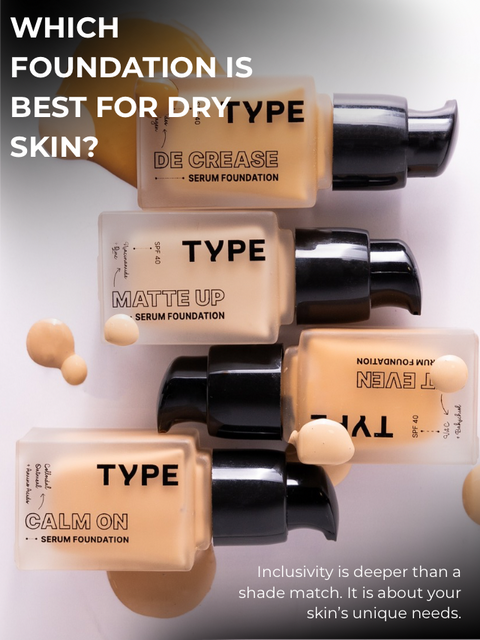
- If your skin often looks dull and lacks radiance, GET EVEN FOUNDATION can be explored as an option within the Type Beauty collection.
- If your concern is the appearance of fine lines alongside dryness, DECREASE FOUNDATION is another option available.
- For those whose dry skin is also sensitive and easily irritated, CALM ON FOUNDATION is designed for this skin concern.
Instead of searching endlessly for which foundation is best for dry skin, consider choosing a formula that matches both your skin type and your individual skin concerns, and comparing it with a bb cream can help you decide which lighter option suits you best.
Common Mistakes to Avoid
Many people unknowingly make small mistakes that affect how foundation looks on dry skin.
Avoid these common habits:
- Skipping moisturizer before makeup
- Choosing only ultra-matte foundations
- Applying thick layers all at once
- Using excessive powder
- Ignoring proper shade matching
- Not adjusting products during seasonal weather changes
Correcting these simple mistakes often makes foundation appear smoother and more natural, and on days when you'd rather skip base makeup altogether, exploring concealer only routines is a helpful alternative.
Expert Tips for Long-Lasting Makeup on Dry Skin
Professional makeup artists often recommend focusing on skin preparation rather than relying solely on foundation.
Helpful tips include:
- Drink enough water to support skin hydration.
- Follow a consistent skincare routine.
- Allow skincare products to absorb before makeup.
- Blend foundation gradually instead of applying heavy layers.
- Refresh makeup with a hydrating setting spray when needed.
- Exfoliate gently once or twice a week to remove dry, flaky skin.
If you've been wondering which foundation is best for dry skin, remember that beautiful makeup starts with healthy, well-prepared skin, and keeping a mini foundation on hand makes it easy to touch up throughout the day.
Conclusion
Finding which foundation is best for dry skin isn't about choosing the most expensive product, it's about selecting a formula that supports hydration, complements your skin's needs, and provides a comfortable, natural-looking finish. Pairing the right foundation with good skincare and thoughtful application techniques can make a noticeable difference in how your makeup looks and feels throughout the day. Still weighing your options? See how to choose the right formula for a full comparison.
Whether you prefer light everyday coverage or a polished makeup look, choosing a foundation that aligns with your skin concerns can help you achieve smoother, healthier-looking results. Ready to find yours? Shop our foundation collection today.
Explore the foundation collection from Type Beauty to discover options tailored to different skin concerns, including GET EVEN FOUNDATION, DECREASE FOUNDATION, and CALM ON FOUNDATION. Find the formula that best complements your skin and create a makeup routine that feels comfortable, looks natural, and enhances your confidence every day.
Frequently Asked Questions
Q1. How do I choose which foundation is best for dry skin?
Look for foundations with hydrating ingredients, lightweight textures, and a natural or dewy finish. Pairing the right formula with moisturized skin usually provides the smoothest results.
Q2. Can dry skin use matte foundation?
Yes, but many people with dry skin find natural or radiant finishes more comfortable. If using a matte formula, proper skin preparation and hydration become especially important.
Q3. What type of foundation lasts longest on dry skin?
Liquid and serum foundations generally wear well on dry skin when applied over moisturized skin and a hydrating primer.
Q4. Why does my foundation look flaky on dry skin?
Flakiness often occurs when the skin lacks moisture, isn't properly prepped, or when too much product is applied over dry areas.
Q5. Is liquid foundation better than powder foundation for dry skin?
In many cases, yes. Liquid foundations tend to blend more smoothly and are less likely to emphasize dry patches compared to powder formulas.
Q6. Will a hydrating primer improve foundation application?
Yes. A hydrating primer helps create a smoother base, allowing foundation to blend more evenly while improving overall comfort and wear.
Q7. Can skincare make foundation look better on dry skin?
Absolutely. Cleansing gently, moisturizing regularly, and allowing skincare products to absorb before applying makeup can significantly improve the final finish.
Q8. How often should I exfoliate if I have dry skin and wear foundation?
Gentle exfoliation once or twice a week is usually enough to remove flaky skin without disrupting the skin's moisture barrier, helping foundation apply more evenly.
Comments (0)
There are no comments for this article. Be the first one to leave a message!