



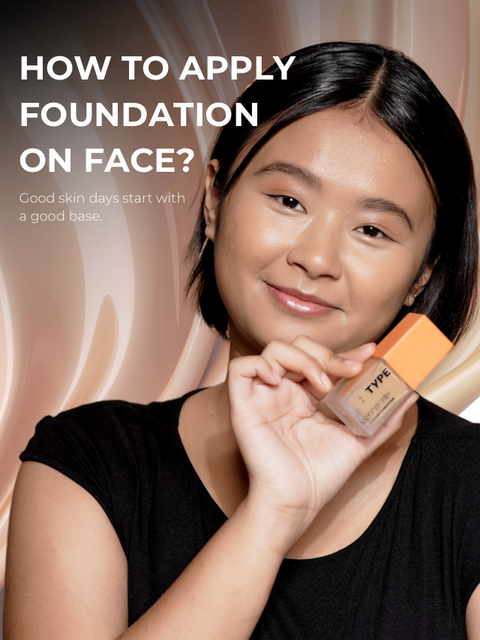
How to Apply Foundation on Face: A Step-by-Step Beginner's Guide for a Flawless Base
How to apply foundation on face starts with clean, moisturized skin, followed by primer and the right foundation for your skin concerns. Apply small dots across your face, blend evenly using a sponge or brush, build coverage only where needed, and finish with a setting spray for a smooth, long-lasting, natural-looking finish.
Foundation is the base of almost every makeup look, but getting it right can make all the difference. If you're wondering how to apply foundation on face, the process is simpler than you might think. With the right technique and skin-focused products from Type Beauty, you can achieve a flawless, even complexion that looks fresh, comfortable, and lasts throughout the day. Not sure which product to reach for first? See how to choose the right formula before you begin.
What Does Foundation Do?
Foundation helps create an even-looking complexion by reducing the appearance of uneven skin tone, redness, blemishes, and pigmentation. It provides a smooth canvas for the rest of your makeup while enhancing your skin's natural beauty rather than masking it.
Today's foundations do much more than offer coverage. Type Beauty's foundations are designed to address specific skin concerns while providing buildable coverage, SPF 50 PA++++ protection (available across selected variants), and a comfortable, skin-like finish for everyday wear, part of a broader range of face makeup products built around skin health.
The secret isn't applying more product; it's choosing the right formula for your skin concern and using the correct technique.

Things You'll Need Before Applying Foundation
Before learning how to apply foundation on face, gather the essentials for a seamless application.
Cleanser
Fresh, clean skin helps foundation sit evenly without mixing with excess oil, dirt, or leftover skincare products.
Moisturizer
Hydrated skin allows foundation to blend smoothly while minimizing dry patches and uneven texture.
Primer
Primer creates a smoother base, helps blur the appearance of pores, and improves makeup longevity. Type Beauty's primer range creates an ideal base before foundation application.
Foundation
Choose a foundation that matches both your skin tone and your primary skin concern. Type Beauty offers four concern-specific foundations instead of a one-formula-fits-all approach, and for travel or quick top-ups, keeping a mini foundation on hand can also be useful.
Makeup Sponge or Brush
A damp sponge creates a natural finish, while a brush offers fuller coverage. The Crystal Blend Sponge from Type Beauty is designed to blend foundation effortlessly for a streak-free result.
Setting Spray
A setting spray helps lock your makeup in place while maintaining a fresh finish. SET ME UP Setting Sprays from Type Beauty help extend wear without making makeup feel heavy.
How to Apply Foundation on Face: Step-by-Step Guide
Step 1: Start with Fresh, Clean Skin
The first step in how to apply foundation on face is preparing your skin properly.
Clean skin allows foundation to adhere evenly and prevents buildup that can cause patchiness. Wash your face with a gentle cleanser suited to your skin type and pat it dry before moving on to skincare.
Step 2: Moisturize Your Skin
Never skip moisturizer, even if you have oily skin.
Well-hydrated skin helps foundation glide smoothly while preventing it from settling into dry areas or fine lines. Allow your moisturizer to absorb fully before applying the next product.
Step 3: Apply Primer
Primer acts as the bridge between skincare and makeup.
It smooths the skin's surface, minimizes the appearance of pores, and creates an even base that helps foundation last longer. Apply a small amount across your face, focusing on areas where makeup tends to fade first.
Step 4: Choose the Right Foundation for Your Skin Concern
Learning how to use foundation on face begins with selecting a formula designed for your skin's unique needs.
Type Beauty offers innovative foundations tailored to different concerns:
- MATTE UP FOUNDATION for oily and acne-prone skin, helping control excess shine while providing comfortable coverage.
- GET EVEN FOUNDATION for uneven skin tone, pigmentation, and dullness, creating a brighter-looking complexion.
- CALM ON FOUNDATION for sensitive skin and visible redness with a lightweight, skin-friendly formula.
- DECREASE FOUNDATION for mature skin and the appearance of fine lines, delivering a smooth, natural finish.

Instead of choosing foundation based only on coverage or finish, selecting one based on your skin concern helps you achieve a better-looking, more comfortable base, an approach also worth comparing with a bb cream if you prefer lighter everyday wear.
Step 5: Pick the Right Shade
Selecting the correct shade is just as important as choosing the right formula.
Instead of testing foundation on your hand, apply a small amount along your jawline. The best shade blends seamlessly into both your face and neck without leaving a noticeable line. Always check your match in natural daylight whenever possible.
Step 6: Dot Foundation Evenly Across Your Face
Rather than applying a large amount all at once, place small dots of foundation on your forehead, cheeks, nose, and chin.
This method gives you better control over coverage and helps distribute the product evenly during blending. Starting with a small amount also allows you to build coverage gradually without making your makeup look heavy.
Step 7: Blend from the Centre Outwards
One of the most important parts of how to apply foundation on face is blending correctly.
Using the Crystal Blend Sponge, gently dab the product into your skin instead of dragging it across your face. Start at the centre, where most people need slightly more coverage, and blend outward toward your hairline and jawline.
Don't forget to blend around the nose, ears, and under the jaw for a seamless finish.
Use gentle bouncing motions rather than rubbing the product to help maintain an even, skin-like finish.
Step 8: Build Coverage Only Where Needed
Avoid applying multiple thick layers across your entire face.
Instead, build coverage gradually only on areas that need extra attention, such as pigmentation, acne marks, or redness. Thin layers look more natural and help foundation remain comfortable throughout the day.
Step 9: Conceal Specific Areas
Foundation creates an even base, while concealer targets individual imperfections.
Apply a small amount of Type Beauty Concealer under the eyes, around the nose, or on blemishes after foundation. Blend gently so the products melt together naturally, and on lighter days, exploring concealer only routines can be a helpful alternative to full coverage.
Step 10: Set Your Makeup
The final step in how to apply foundation on face is setting your makeup.
Finish with SET ME UP Setting Spray to help reduce transfer and keep your base looking fresh for longer. A light mist also helps soften the appearance of powder and creates a more natural finish.
How to Use Foundation on Face for Different Skin Concerns
Every skin type has different needs, so adjusting your routine can make a noticeable difference.
Oily and Acne-Prone Skin
Choose lightweight, matte formulas like MATTE UP FOUNDATION, or on lower-coverage days, opt for a dedicated skin tint for oily skin. Apply thin layers and avoid using excessive product around oily areas.
Uneven Skin Tone and Dullness
If your concern is dark spots, pigmentation, or dull-looking skin, GET EVEN FOUNDATION is designed to help create a brighter, more even-looking complexion with buildable coverage.
Sensitive Skin and Redness
For skin that experiences redness or discomfort, CALM ON FOUNDATION is designed for sensitive skin and visible redness, providing lightweight, comfortable coverage for everyday wear.
Fine Lines and Wrinkles
If you're concerned about fine lines and wrinkles, DECREASE FOUNDATION is formulated to provide comfortable, buildable coverage with a smooth, natural-looking finish.
Common Foundation Mistakes to Avoid
Even with the right products, a few habits can affect your results, and knowing which foundation ingredients to avoid can help prevent breakouts before they start.
Avoid these common mistakes:
- Skipping skincare before makeup.
- Choosing the wrong foundation shade.
- Applying too much product at once.
- Forgetting to blend around the jawline and hairline.
- Using dirty makeup tools.
- Not allowing skincare to absorb before foundation.
- Skipping primer.
- Forgetting to set your makeup for longer wear.
Pro Tips for a Natural-Looking Foundation Finish
If you want your makeup to look like healthy skin rather than heavy coverage, and for a lighter alternative on busy mornings, a skin tint is worth keeping nearby, keep these expert tips in mind:
- Apply foundation in thin, buildable layers.
- Use a damp sponge for a soft, skin-like finish.
- Blend in natural daylight whenever possible.
- Match your foundation to both your skin tone and skin concern.
- Wait a minute after skincare before applying foundation.
- Use concealer only where extra coverage is needed instead of layering more foundation.
Final Thoughts
Learning how to apply foundation on face is all about preparation, technique, and choosing products that work with your skin rather than against it. When your skin is properly prepped, your foundation matches your skin concerns, and you blend in thin layers, achieving a flawless finish becomes much easier, especially when your foundation is part of a complete makeup kit for women.
Discover Your Perfect Base with Type Beauty
Whether you're creating a fresh everyday look or full-glam makeup, Type Beauty offers a smarter approach to foundation with products designed for real skin concerns. Explore MATTE UP FOUNDATION, GET EVEN FOUNDATION, CALM ON FOUNDATION, and DECREASE FOUNDATION, then complete your routine with Primers, the Crystal Blend Sponge, Concealers, and SET ME UP Setting Sprays for a smooth, long-lasting finish. Find the foundation that works for your skin and elevate your makeup routine with Type Beauty. Ready to get started? Shop the full foundation range today.
Frequently Asked Questions
Q1. How do beginners apply foundation on face?
Start with clean, moisturized skin, apply primer, dot foundation evenly across your face, blend with a sponge or brush, and set with a setting spray for longer wear.
Q2. How do I use foundation on face without looking cakey?
Apply thin layers, blend thoroughly, avoid using too much product, and ensure your skin is well moisturized before makeup.
Q3. Can I apply foundation without primer?
Yes, but primer helps create a smoother base and improves how long your foundation lasts throughout the day.
Q4. Is a sponge better than a foundation brush?
Both work well. A damp sponge creates a softer, natural finish, while a brush generally provides fuller coverage.
Q5. Will foundation cover acne marks completely?
Foundation helps even out skin tone, but combining it with concealer provides better coverage for acne marks and pigmentation.
Q6. What is the correct order to apply foundation?
Cleanse, moisturize, apply primer, use foundation, add concealer if needed, and finish with a setting spray.
Q7. Why does my foundation look patchy?
Patchiness is often caused by dry skin, insufficient blending, applying too much product, or using a formula that doesn't suit your skin.
Q8. What type of foundation should I choose?
Choose a foundation based on your skin concerns. For example, oily skin benefits from matte formulas, while sensitive or mature skin may need lightweight, hydrating options.
Comments (0)
There are no comments for this article. Be the first one to leave a message!