



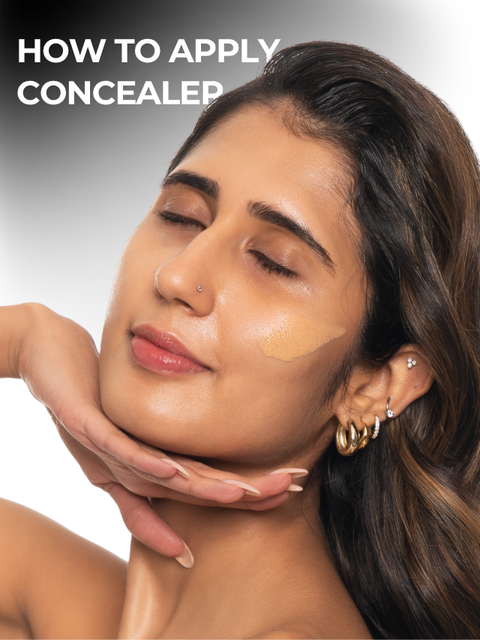
How to Apply Concealer Like a Pro: A Step-by-Step Guide for Flawless, Natural-Looking Skin
Knowing how to apply concealer starts with prepping your skin, choosing a concealer suited to your skin concern, applying small amounts only where needed, blending gently, and building coverage in thin layers. Finish with a light setting powder or setting spray for a smooth, natural-looking finish that lasts throughout the day.
Learning how to apply concealer correctly can instantly brighten your complexion minimise the appearance of dark circles blemishes and pigmentation and create a more even-looking finish. At Type Beauty our skincare-powered concealers are formulated for different skin concerns helping you achieve seamless coverage while supporting your skin with targeted ingredients. Explore our GET EVEN CONCEALER EYE LIGHT CONCEALER and ZIT QUIT CONCEALER to find the formula that suits your needs. If you're just starting out our basic makeup products are a good place to build your routine around.
What Does Concealer Do?
Concealer is designed to provide extra coverage exactly where your skin needs it. Unlike foundation which creates an even base across the face concealer targets specific concerns without making makeup feel heavy. Browsing our range of face makeup products can help you find pieces that work well alongside your concealer.
You can use concealer to:
- Brighten under-eye dark circles
- Cover blemishes and breakouts
- Reduce the appearance of redness
- Conceal pigmentation and dark spots
- Even out areas around the nose and mouth
- Highlight parts of the face for a naturally lifted look
The key is using the right amount in the right places rather than applying it all over your face.
Choose the Right Concealer Before You Apply It
One of the biggest factors in achieving natural-looking coverage is selecting a concealer that matches both your skin tone and your skin concern. Different formulas are designed to address different needs. If you're weighing textures our comparison of liquid vs cream concealers can help you decide which suits you best.
For Dark Spots & Dullness (GET EVEN CONCEALER)
If pigmentation, post-acne marks, or dullness are your primary concerns, choose a concealer designed specifically for these needs.
Type Beauty GET EVEN CONCEALER is formulated for dark spots and dullness and provides buildable coverage with a lightweight feel. It is powered by Niacinamide, Vitamin C, and Bakuchiol, ingredients selected to help improve the appearance of uneven skin tone while delivering a smooth, natural-looking finish.

For Fine Lines, Wrinkles & Dark Circles (EYE LIGHT CONCEALER)
The skin around your eyes is thinner than the rest of your face so it benefits from a lightweight hydrating concealer. Pairing it with the right eye makeup products can help brighten the whole eye area further.
Type Beauty EYE LIGHT CONCEALER is formulated for fine lines and wrinkles. It offers weightless, buildable coverage and is enriched with Caffeine to help reduce the appearance of puffiness and dark circles, Peptides to support younger-looking skin, and Sodium Hyaluronate for hydration. It can be layered by allowing the first coat to dry before applying another for additional coverage.

For Acne & Uneven Texture (ZIT QUIT CONCEALER)
If you're covering blemishes or acne marks, use a concealer that complements acne-prone skin.
Type Beauty ZIT QUIT CONCEALER is designed for acne and uneven texture. It provides feather-light, buildable coverage and contains 2% Salicylic Acid, which helps clear clogged pores, along with Green Tea Extract to soothe the skin. The brand recommends applying the concealer directly onto the blemish and building up to three thin layers if additional coverage is needed.

How to Apply Concealer Step by Step
Mastering how to apply concealer becomes much easier when you follow a simple, structured routine. Applying too much product or skipping preparation can affect the final finish, while a few careful steps help create smooth, even-looking coverage.
Step 1: Prepare Your Skin
Every flawless makeup look begins with good skin preparation.
Start by:
- Cleansing your face
- Applying a lightweight moisturiser
- Using a primer if desired
Hydrated skin allows concealer to blend more smoothly and reduces the chances of it settling into dry patches or fine lines.
Step 2: Apply Foundation or Skin Tint First
If you're wearing foundation or a skin tint, apply it before concealer. This creates an even base and often reduces the amount of concealer you'll need.
For everyday makeup a lightweight skin tint can even out the complexion while allowing concealer to focus only on areas that need extra coverage. If you're deciding between the two options our cc cream guide explains how it compares to a foundation or skin tint.
Step 3: Apply Concealer Only Where Needed
Understanding how to apply concealer also means knowing where to place it.
Apply small dots to areas such as:
- Under the eyes
- Around the nose
- Acne spots
- Pigmentation
- Redness
- Chin
- Around the mouth if needed
Instead of covering large areas, concentrate only on places that need additional coverage. This keeps makeup looking fresh and natural.
Step 4: Blend Gently
After application, blend using:
- A damp makeup sponge
- A concealer brush
- Clean fingertips
Rather than rubbing the product, gently tap it into the skin. This technique helps maintain coverage while creating a seamless finish. If you like to keep a travel-friendly foundation on hand for touch-ups a mini foundation pairs well with this step.
Take extra care around the under-eye area, where the skin is thinner and more delicate.
Step 5: Build Coverage Gradually
One of the most common mistakes is applying too much concealer at once.
Instead:
- Apply a thin layer first.
- Blend completely.
- Add another light layer only if needed.
This gradual approach creates better coverage without looking cakey. It also helps the product move naturally with your skin throughout the day.
If you're learning how to apply concealer for the first time, remember that less product often delivers the most natural-looking results.
Step 6: Set Your Concealer
To help your makeup stay in place, lightly set concealer after blending.
Depending on your skin type, you can use:
- A finely milled loose powder for a soft matte finish
- A setting spray for a more natural, skin-like look
Use only a small amount, particularly under the eyes, to avoid emphasising texture or fine lines.
Setting your concealer is especially useful if you have oily skin or need your makeup to last through a long day.
How to Apply Concealer Under Eyes Without Creasing
The under-eye area is delicate so using the right technique makes a noticeable difference. If you've been wondering how to apply concealer under the eyes without it settling into fine lines the answer is to use less product and blend carefully. For stubborn discolouration our guide on best concealers for dark circles on Indian skin covers formulas worth trying.
Hydrate First
Always apply an eye cream or lightweight moisturiser before concealer. Hydrated skin creates a smoother base and helps makeup glide on more evenly.
Use a Small Amount
A little goes a long way. Instead of covering the entire under-eye area, apply a few small dots near the inner corner where darkness is usually more visible.
Blend Gently
Use a damp sponge or your ring finger to tap the concealer into the skin. Avoid dragging or rubbing, as this can remove product and create streaks.
Set Lightly
If needed, dust a small amount of loose powder over the area. Too much powder can make the under-eye area appear dry.
For under-eye concerns, Type Beauty EYE LIGHT CONCEALER offers lightweight, buildable coverage while ingredients like Peptides, Sodium Hyaluronate, and Panthenol help keep the skin feeling comfortable and hydrated.
How to Apply Concealer on Acne and Blemishes
Covering blemishes requires precision rather than applying more product.
- Start with Clean Skin: Cleanse and moisturise your face before applying makeup. This helps concealer sit evenly on the skin.
- Apply Directly on the Spot: Use a small brush or the applicator to place concealer only on the blemish. Avoid spreading it over a large area.
- Let It Sit: Allow the concealer to rest for a few seconds before blending. This helps improve coverage.
- Tap to Blend: Blend only around the edges using gentle tapping motions. Leave the centre of the blemish covered.
- Build if Needed: If the blemish is still visible, add another thin layer instead of applying one thick coat.
For acne-prone skin, Type Beauty ZIT QUIT CONCEALER is formulated with 2% Salicylic Acid and Green Tea Extract, providing buildable coverage while supporting clearer-looking skin.
How to Apply Concealer on Dark Spots and Pigmentation
Dark spots usually need targeted coverage rather than heavy makeup.
Choose a Matching Shade
Select a concealer that closely matches your skin tone for the most natural finish.
Apply Precisely
Place a small amount directly over the pigmentation instead of covering the surrounding skin.
Blend the Edges
Use a sponge or brush to soften only the edges while keeping the highest coverage on the dark spot.
Layer Slowly
If more coverage is needed, repeat with another thin layer after the first one has blended.
For pigmentation and uneven skin tone, Type Beauty GET EVEN CONCEALER combines buildable coverage with Niacinamide, Vitamin C, and Bakuchiol to help improve the appearance of dark spots over time.
Common Concealer Mistakes to Avoid
Even the best concealer can look uneven if it's applied incorrectly.
Avoid these common mistakes:
- Applying too much product at once.
- Skipping moisturiser before makeup.
- Choosing the wrong shade.
- Rubbing instead of tapping while blending.
- Using the same concealer for every skin concern.
- Applying powder too heavily.
- Forgetting to blend around the edges.
- Covering the entire face instead of targeting specific areas.
Small adjustments to your technique can make your makeup look smoother and more natural.
Pro Tips for a Natural-Looking Finish
Professional makeup artists often rely on simple techniques rather than using more makeup.
Here are a few tips:
- Start with light layers.
- Blend in natural lighting whenever possible.
- Let each layer settle before adding more.
- Use clean brushes or sponges.
- Match your concealer to your skin concern as well as your skin tone.
- Keep the rest of your base lightweight for a fresh finish.
If you're still learning how to apply concealer, remember that patience and blending usually create better results than adding extra product.
How to Choose the Best Concealer for Your Skin
Different skin concerns benefit from different formulations. Choosing the right concealer can make your makeup routine more effective and comfortable.
|
Skin Concern |
Recommended Type Beauty Concealer |
|
Dark circles |
EYE LIGHT CONCEALER |
|
Fine lines |
EYE LIGHT CONCEALER |
|
Pigmentation |
GET EVEN CONCEALER |
|
Dark spots |
GET EVEN CONCEALER |
|
Acne-prone skin |
ZIT QUIT CONCEALER |
|
Blemishes |
ZIT QUIT CONCEALER |
|
Everyday spot coverage |
GET EVEN CONCEALER |
Each concealer is designed with skincare-inspired ingredients to address specific concerns while providing comfortable, buildable coverage.
Conclusion
Learning how to apply concealer is about combining the right technique with the right formula. Preparing your skin, applying thin layers, and blending carefully can help you achieve a fresh, even-looking complexion without a heavy finish. Ready to find your match? Shop our concealer collection today.
At Type Beauty, every concealer is formulated for a specific skin concern rather than taking a one-size-fits-all approach. Choose GET EVEN CONCEALER for dark spots and dullness, EYE LIGHT CONCEALER for fine lines, wrinkles, and dark circles, or ZIT QUIT CONCEALER for acne and uneven texture. Explore the Type Beauty Concealer Collection to find skincare-powered coverage tailored to your skin's unique needs.
Frequently Asked Questions
Q1. How do you apply concealer correctly?
Start with clean, moisturised skin. Apply concealer only where needed, blend gently using a sponge, brush, or fingertips, and build coverage in thin layers for a natural finish.
Q2. How do you apply concealer under your eyes?
Apply a small amount to the inner corner and under the eyes, then tap gently to blend. Finish with a light dusting of powder if needed to reduce creasing.
Q3. What is concealer used for?
Concealer helps cover dark circles, blemishes, redness, pigmentation, acne marks, and uneven skin tone while brightening targeted areas of the face.
Q4. Can you use concealer without foundation?
Yes. Concealer can be worn on its own to cover specific areas while keeping the rest of your skin looking natural and lightweight.
Q5. Can concealer cover acne and dark spots?
Yes. A buildable concealer can effectively conceal blemishes, acne marks, and pigmentation when applied directly to the affected area and blended carefully.
Q6. Is concealer applied before or after foundation?
In most makeup routines, concealer is applied after foundation. This helps you use less product and target only the areas that need extra coverage.
Q7. Will concealer crease under the eyes?
Concealer may crease if too much product is applied or the under-eye area isn't hydrated. Using a small amount and setting it lightly can help minimise creasing.
Q8. Why is choosing the right concealer important?
Different concealers are formulated for different skin concerns. Choosing one that matches your skin type and concern helps create smoother coverage and a more natural-looking finish.
Comments (0)
There are no comments for this article. Be the first one to leave a message!